It was weekend, we had time on our hands, and we were in Armenia, a country known for its ancient culture. We’d been planning a bigger trip for a while, scanning the internet for places to visit. One particularly caught our attention: a pagan temple located near the village of Garni. For us Europeans, paganism sounds crazy and foreign, something that’s present in our history but wiped off the maps of our visible history. Thus, to see this temple seemed worth it: off we went. We made a trip to Yerevan, Armenia’s capital, from where we made a day trip to Garni. After about 30, 40 minutes on a marshrutka, where I got an intense ass-workout by half sitting on a seat, we arrived in the village.
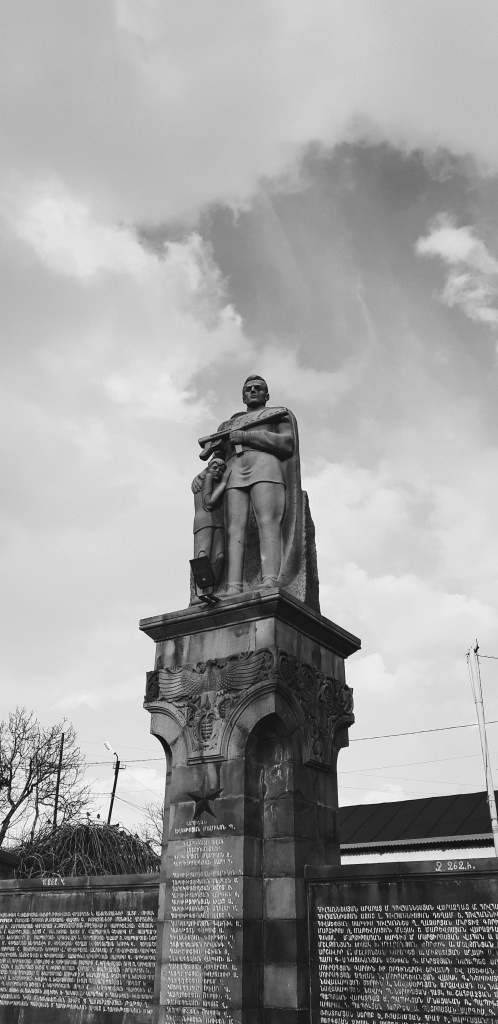
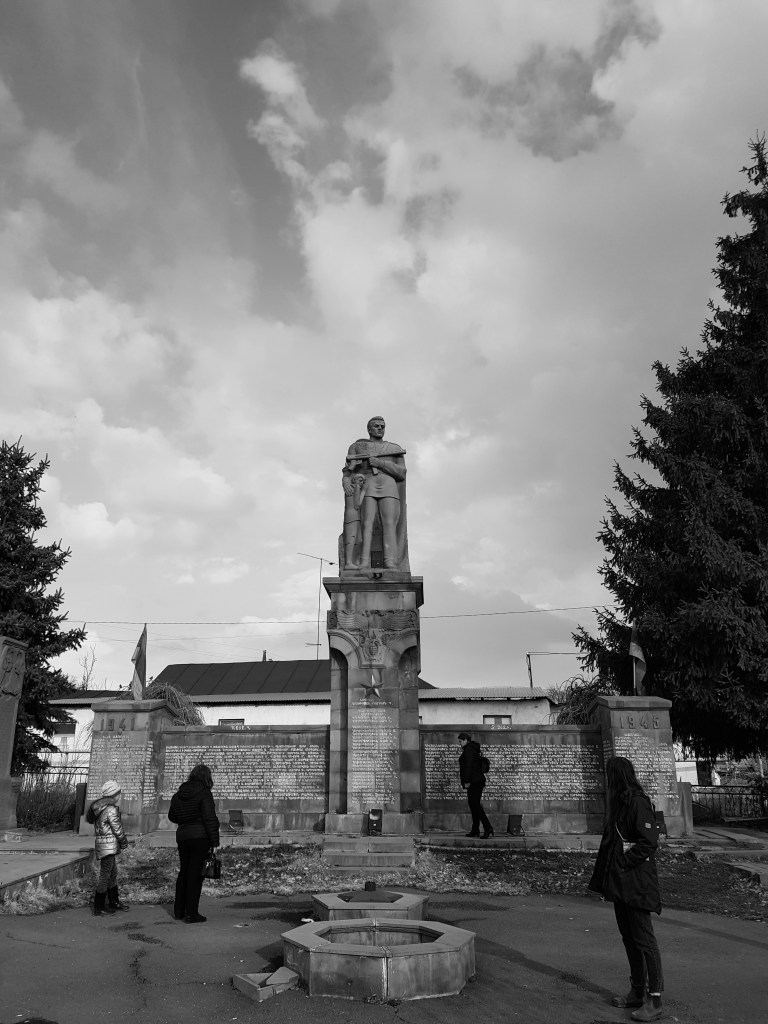
The village of Garni itself is really small and is living mainly off the (mainly Russian) tourists coming to visit the temple. This village did not escape the Soviet desire to leave its omnipresent footprint: a big memorial to the Second World War is visible when entering the village. Where an eternal flame was supposed to be burning, as stoker stands parched.
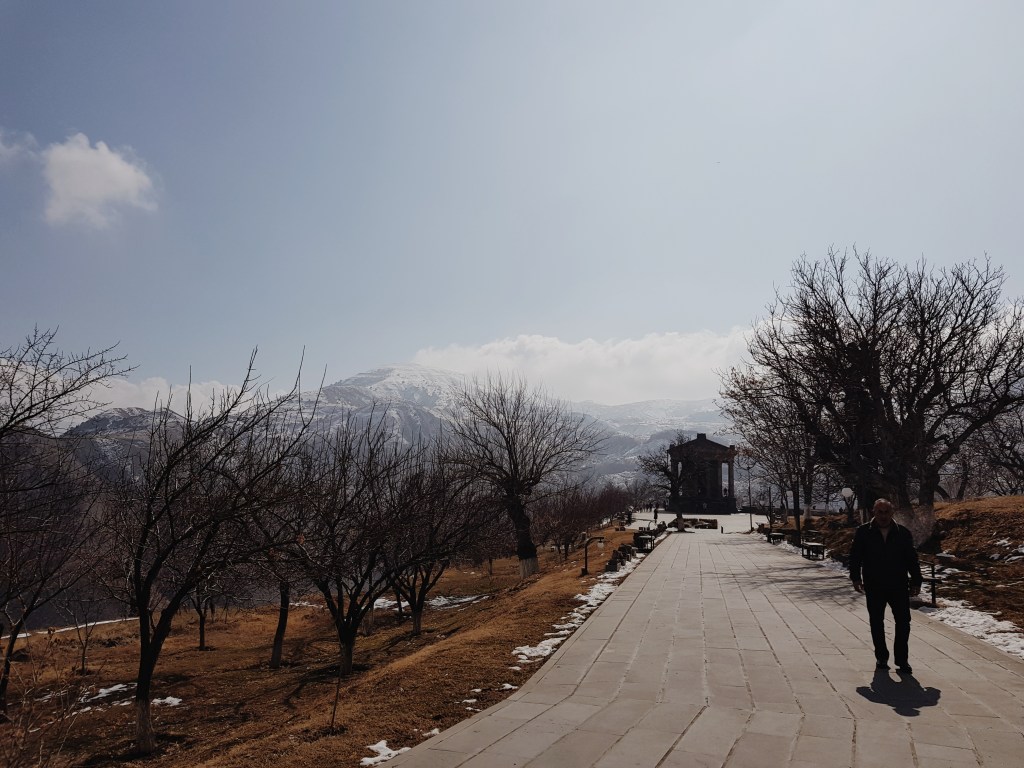
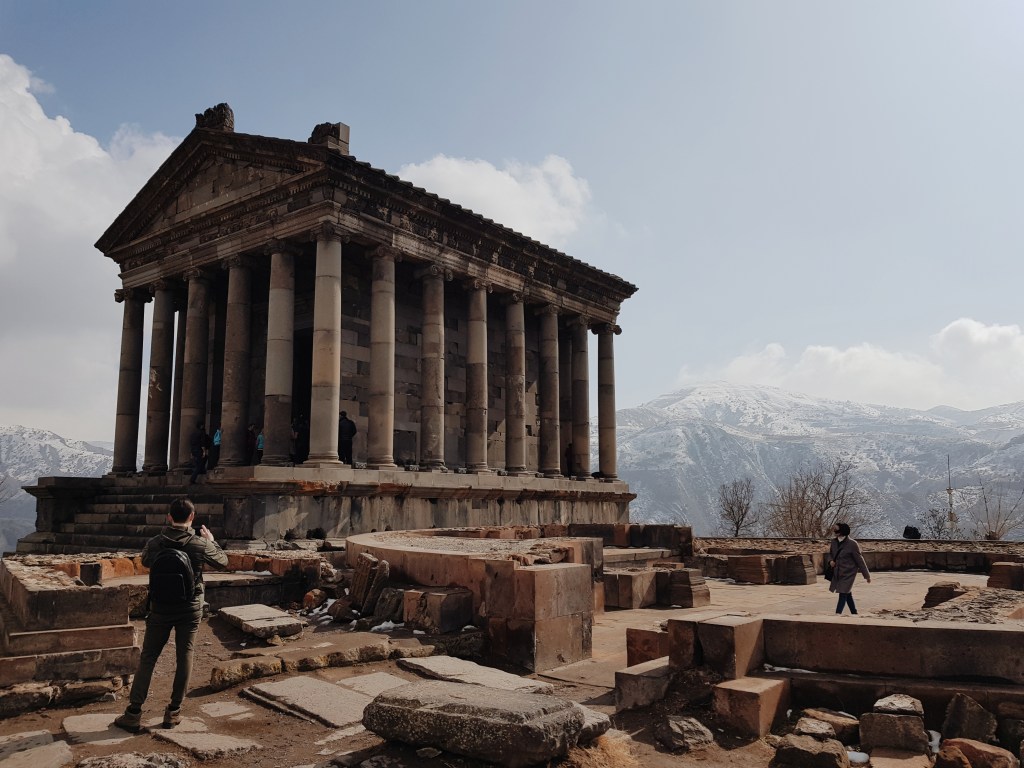
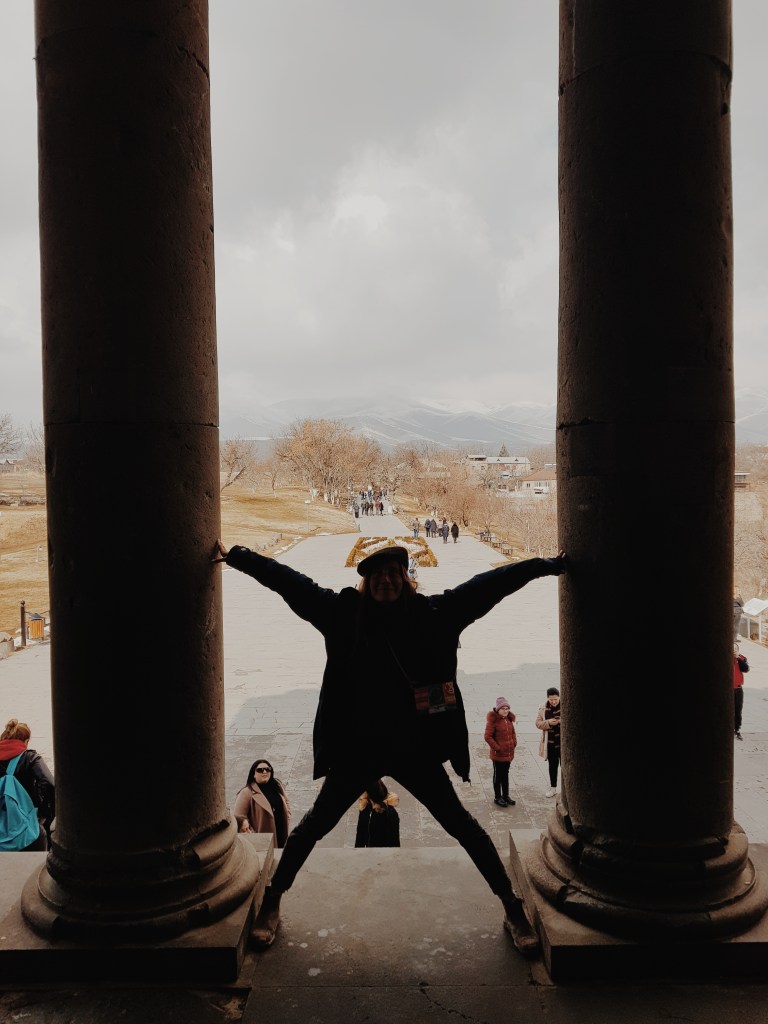
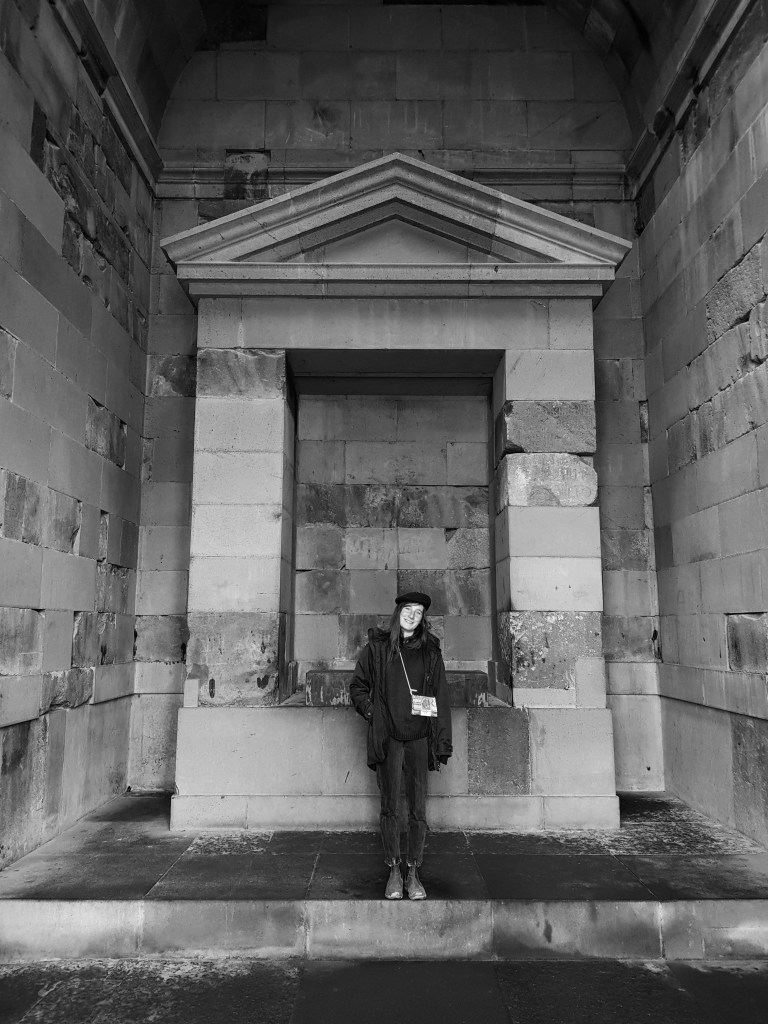
After a small walk through the village, where you’ll be surrounded by restaurants and (Russian) tourists, even off-season, you’ll reach the temple. It’s surprisingly well-preserved, with a modern and clean walkway leading to the temple. Some people will be disappointed by the preservation, as it contrasts the (Soviet) decay you see in the rest of the country. The temple of Garni makes you feel like you are in Europe. Upon closer inspection, it’s not only the preservation that causes this feeling: the Greco-Roman architecture is the one found all across Europe.
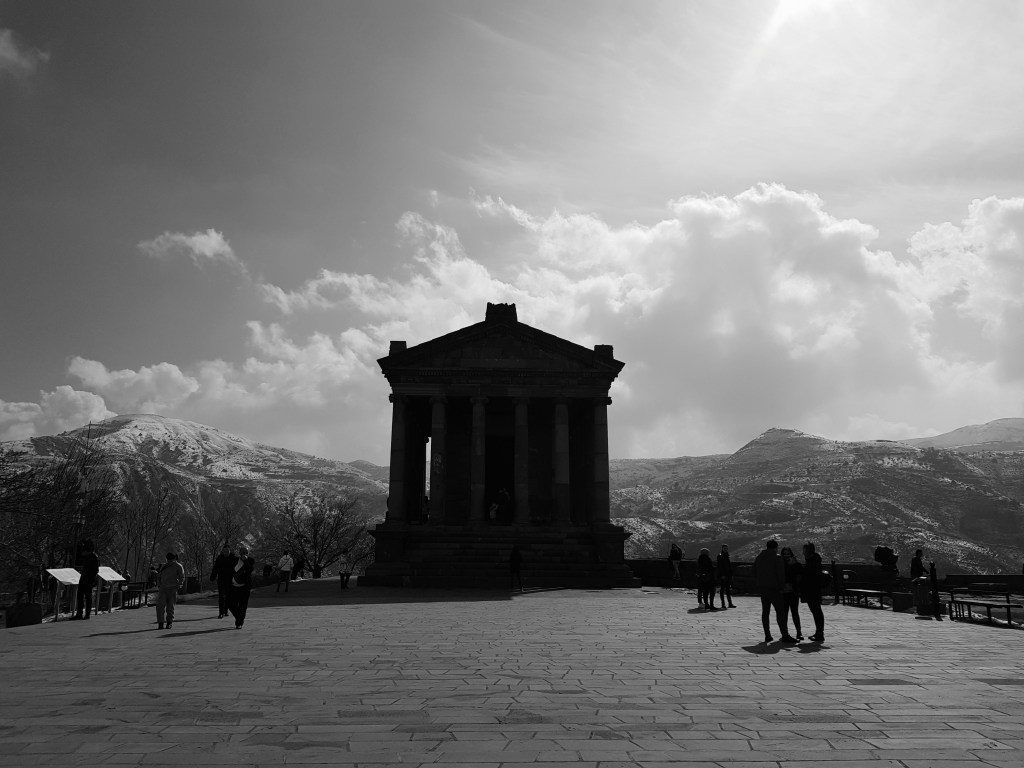
The exact date and reason for the construction of the temple are unknown, but the general theory is the following. The temple was built around the first century AD, a time when Armenia was a vital buffer state between the Parthian Empire and the Roman Empire. In the first century, these two empires fought a war over the succession of the Armenian throne. After the war, Rome recognised Armenia as an independent state, but this came at a price: Armenia would now be a client state to the Roman Empire.
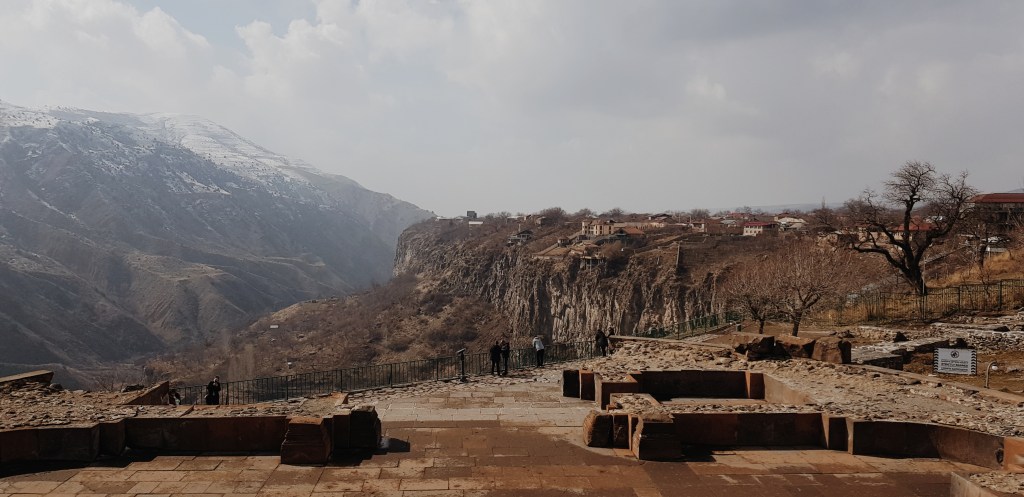
Thus, after Armenia had been designated as a client state, Tiridates I of Armenia was crowned King of Armenia by Nero, Emperor of Rome at the time. Nero gave Tiridates a lot of money and with that money he built the temple of Garni. The temple was dedicated to Mirh, the god of sun and heaven in ancient Armenian mythology. These factors combined make the temple a perfect example of classicist, Roman architecture and a symbol of Armenian paganism.
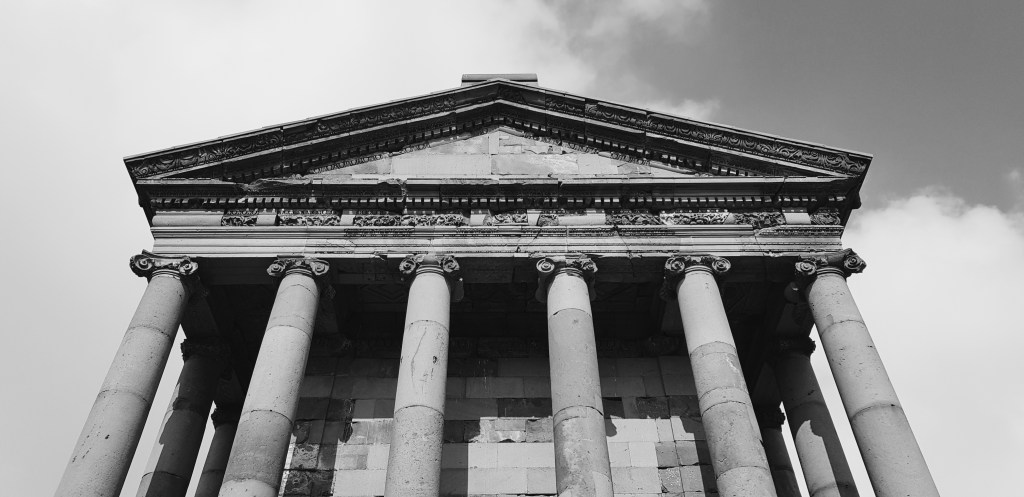
Because of the classicist, Roman style not all scholars are ‘happy’ with the temple. Some see it as an example of ‘foreign’ (i.e. Roman) architecture on Armenian soil, symbolising foreign influence and domination. A blow to a proud nation, of course.
Whatever way you look at it, the temple is incredibly significant for Armenia. Known as the oldest Christian country in the world, the fact that there’s a pagan temple that predates its Christian history shows that this country has even more to build on than just that Christian history, which in itself is already amazing. The pagan period only adds to the mythical attraction of this ancient country.
Because of its pagan function, the temple has become a shrine for neopagans. While we were there, we saw a girl intensely meditating / praying inside the columns. We weren’t sure whether she was a believer in paganism, but it shows the attraction the temple exerts on tourists.
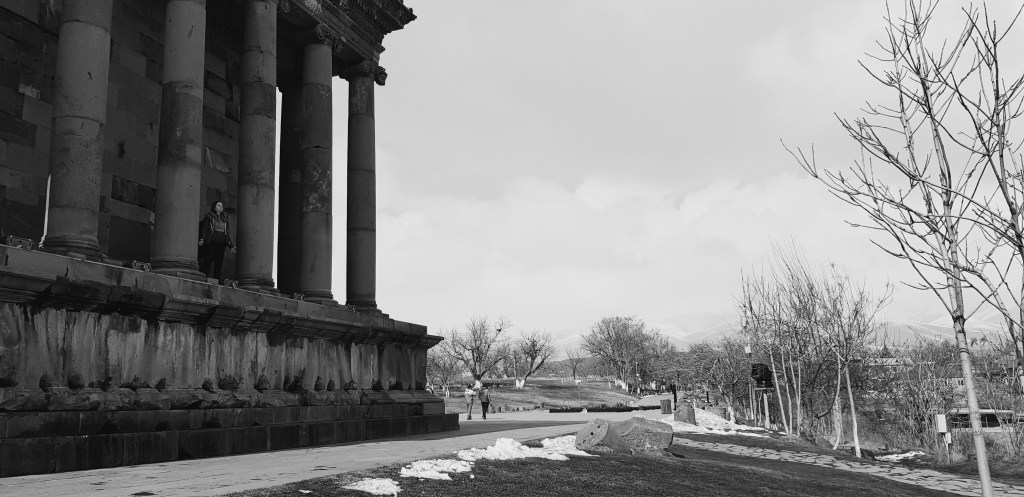
When Armenia adopted Christianity as a state religion in the fourth century, nearly all pagan temples were destroyed. The temple of Garni, however, survived. Again, scholars do not know exactly why this temple wasn’t smashed to the ground, but some theories say that the temple was a tomb for a Roman-appointed king of Armenia, whereas others say that the temple was preserved simply because it was so beautiful.

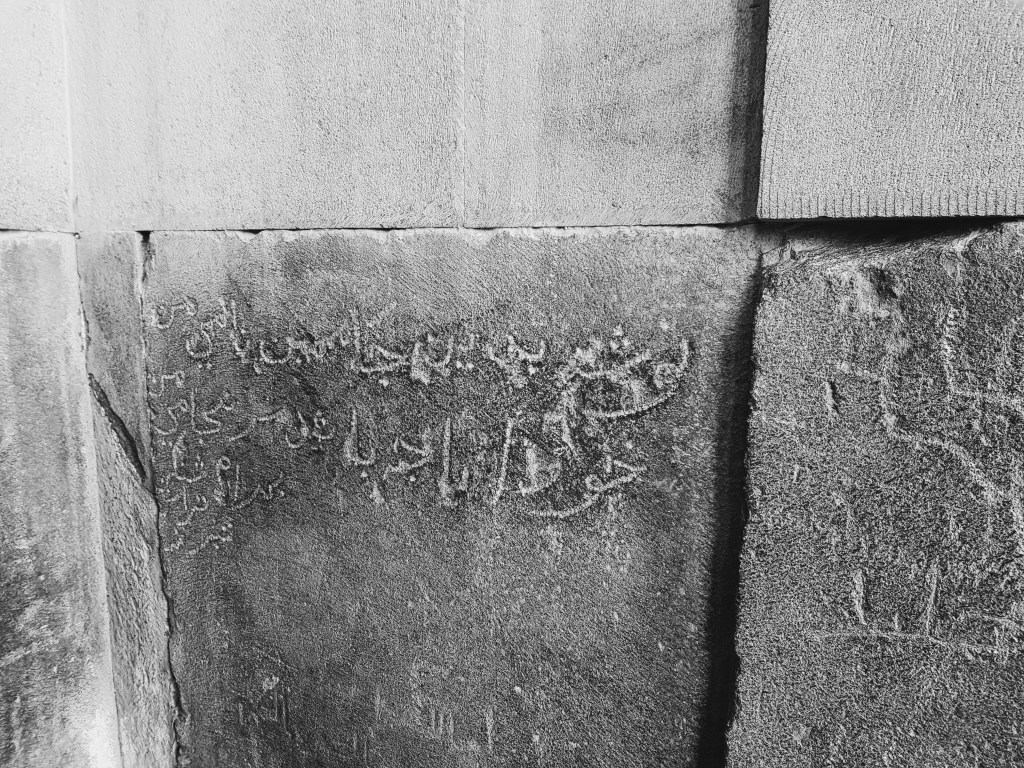
Sadly, even though the temple survived destruction by human hand, an earthquake in 1679 made it collapse completely. The separate stones weren’t completely destroyed, however, and from 1969-1975 Alexander Sahinian reconstructed the temple, using the original materials. Only where the original stones were too destroyed did he use new ones, which were of a lighter colour, to show which parts were new and which were old. He did an incredible job in preserving this masterpiece of architecture and history.
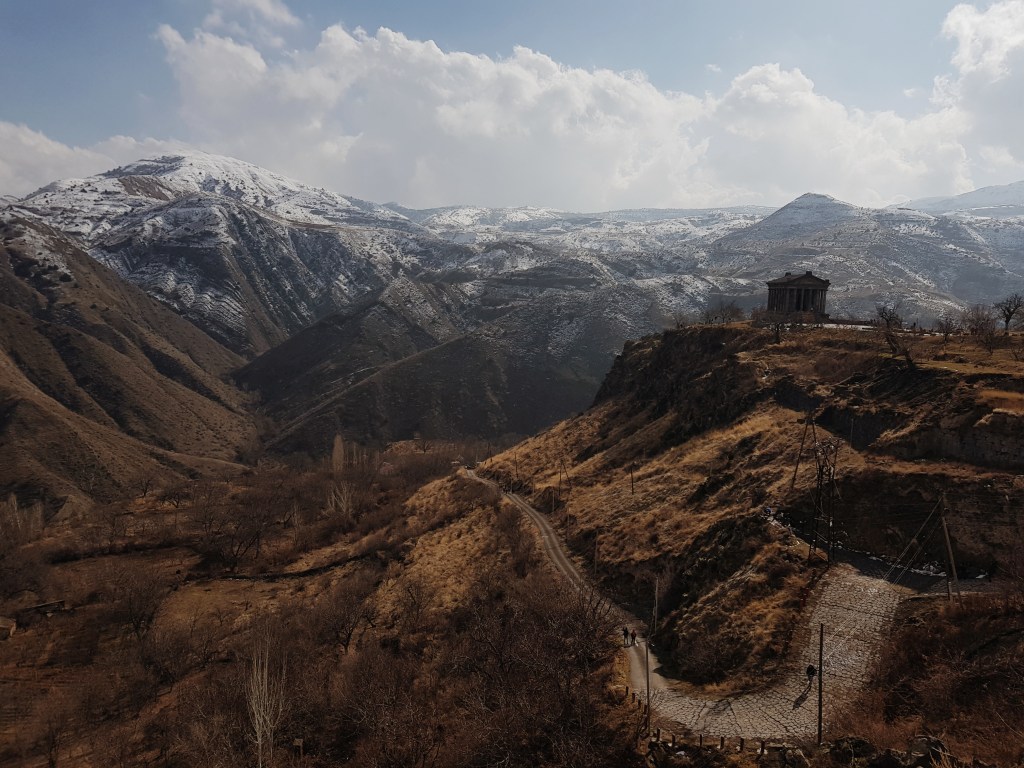
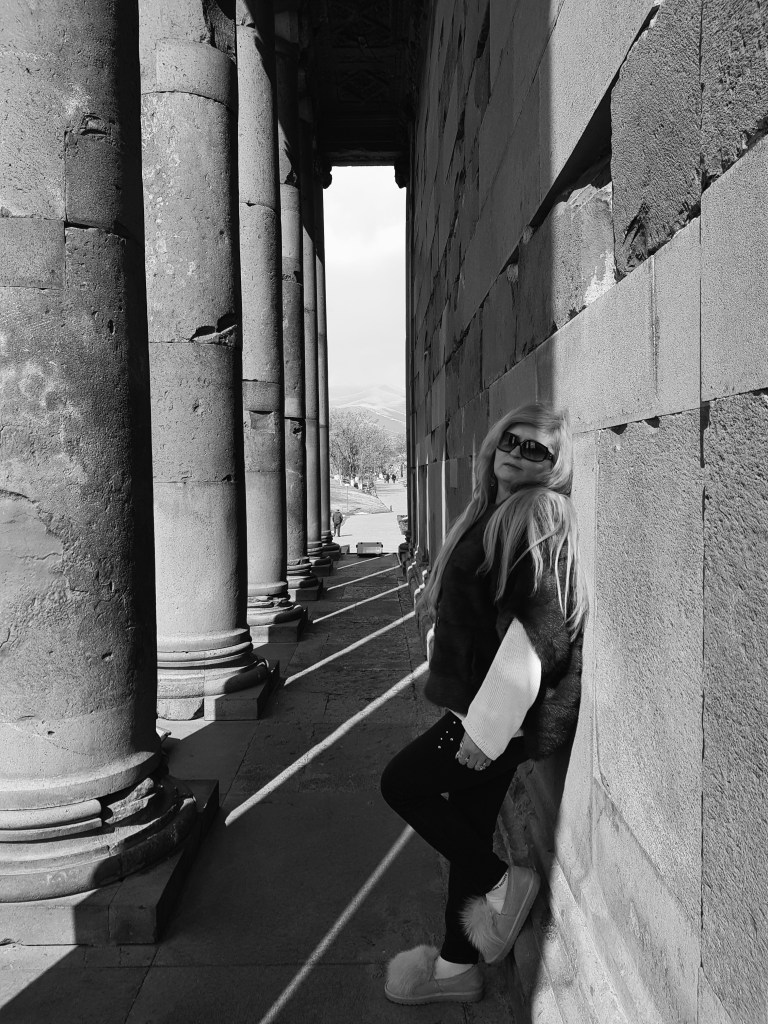
Visiting the temple itself probably won’t take up that much of your time, unless you’re really into meditating or just chilling on the temple in slippers, like Alona was.
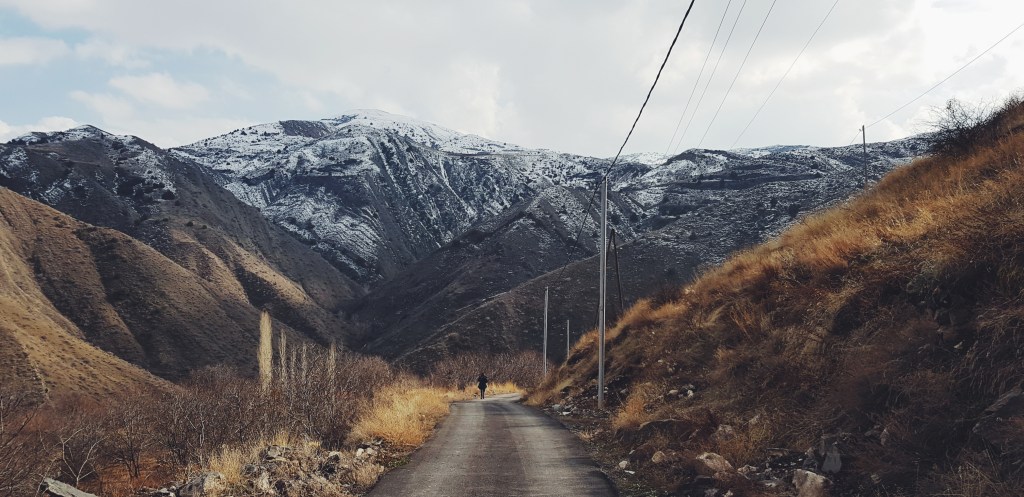
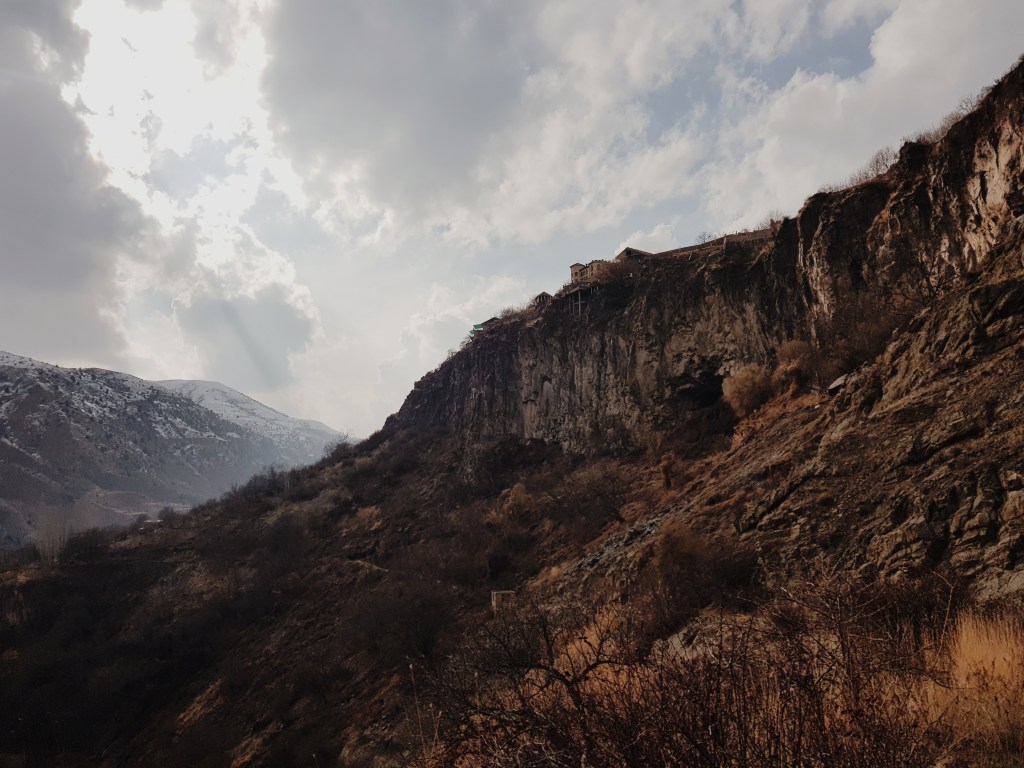
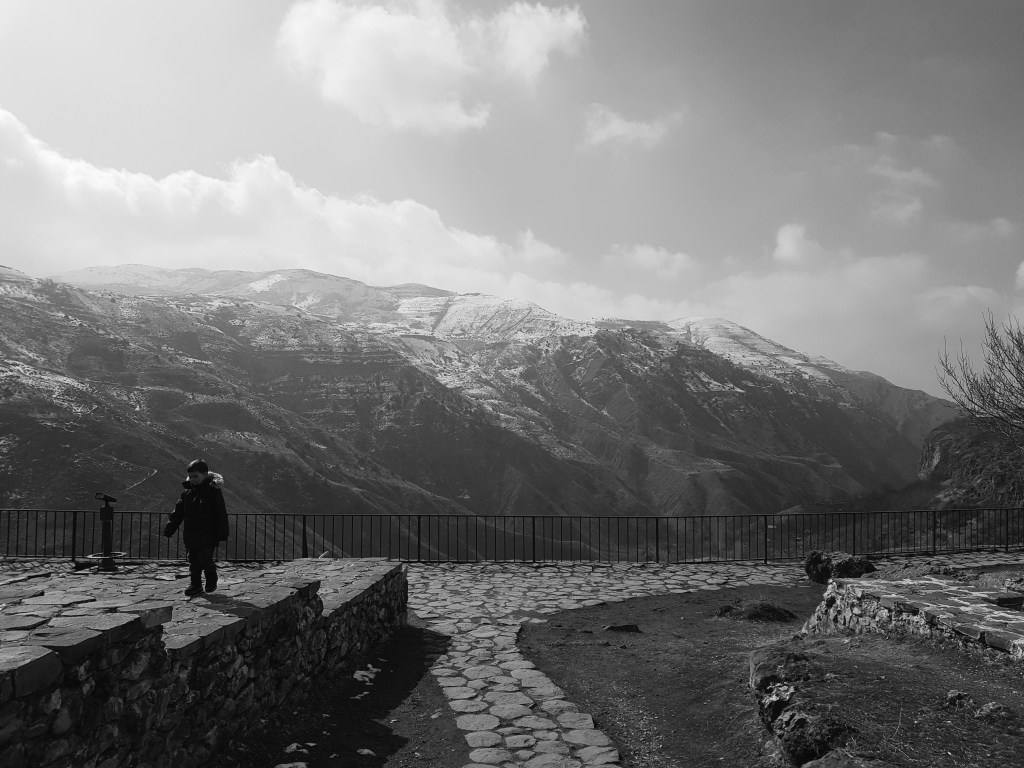
That said, when you’re done visiting the temple, you can start exploring the surroundings. Leading down from the temple is a road that takes you to the Garni Gorge, a valley with incredible stone carvings, crafted by the river over centuries and centuries.
All in all, the temple of Garni and its surroundings are definitely a must-see when visiting Armenia. If you are in Yerevan, just take a marshrutka there. It will only take about half an hour and what you’ll get to see is unforgettable.
 Winter Winds