Travel websites advertise Dilijan as being “Armenia’s Switzerland”. This of course calls to mind pictures of mountains, lakes, cottages, trees and of course skiing and snowboarding. Perfect for people with money and a lot of time on their sleeves. We, however, did not have money nor a lot of time. We had a different reason to visit this village and its surroundings in the north of Armenia.
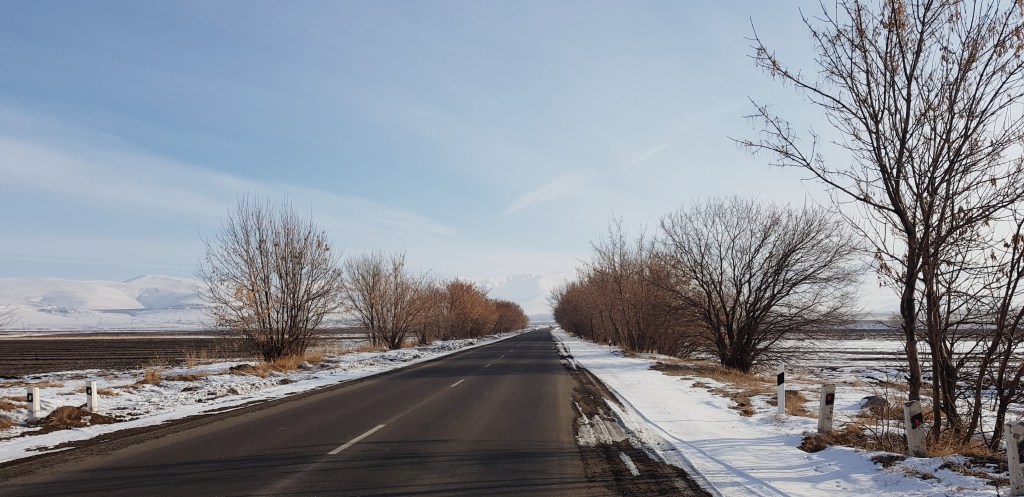
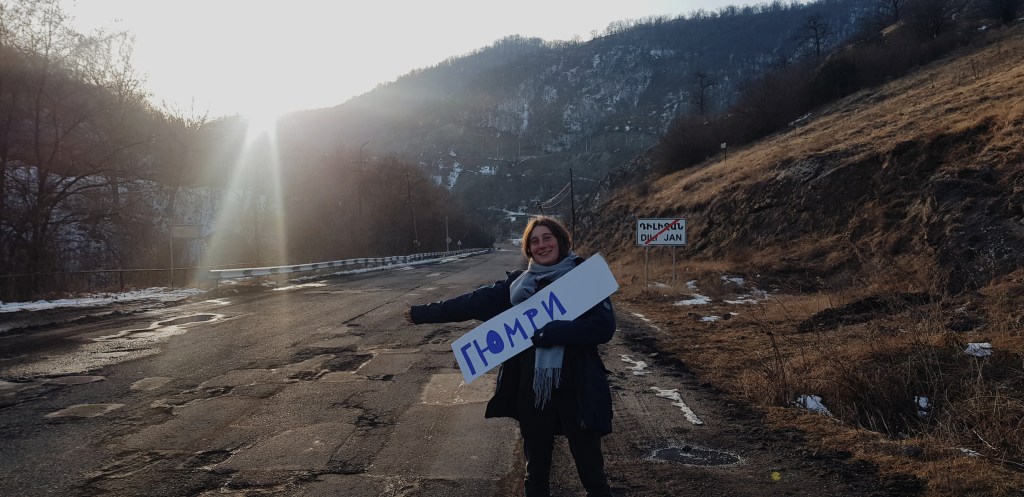
First of all, it’s reachable by hitchhiking. Armenia is one of those countries where you know that you can reach a certain point in a certain amount of time by hitchhiking. Dilijan is about two hours away from Gyumri (by car), so we decided to give it a try. And make it in two hours we did. In fact, the second ride we got took us all the way to Dilijan. Our drivers even gave us coffee on the way, an example of the omnipresent Armenian hospitality. As a hitchhiker being picked up, you are a guest, so you shall be served.
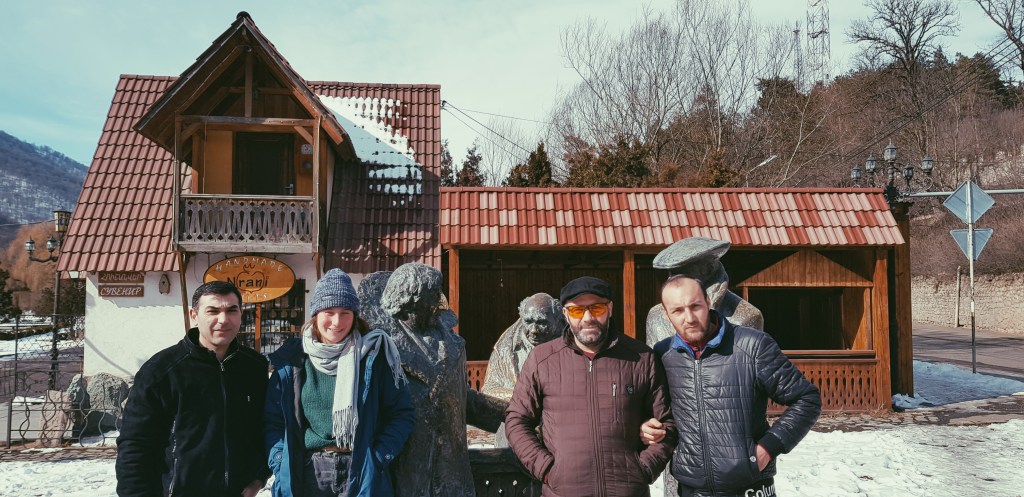
I’ve heard a lot about Dilijan, and since my girlfriend found out that there were ruins of a Soviet villa in the village, we decided that we wanted to see it. The ruins belong to a villa built in 1936 for Khanjian, the first secretary of the Armenian communist party. In the year that the villa was built, Khanjian died during an interrogation, not unsuspiciously. Now, the villa stands as a memory to not only Khanjian, but to Soviet times in general. You will understand: I had to see it.
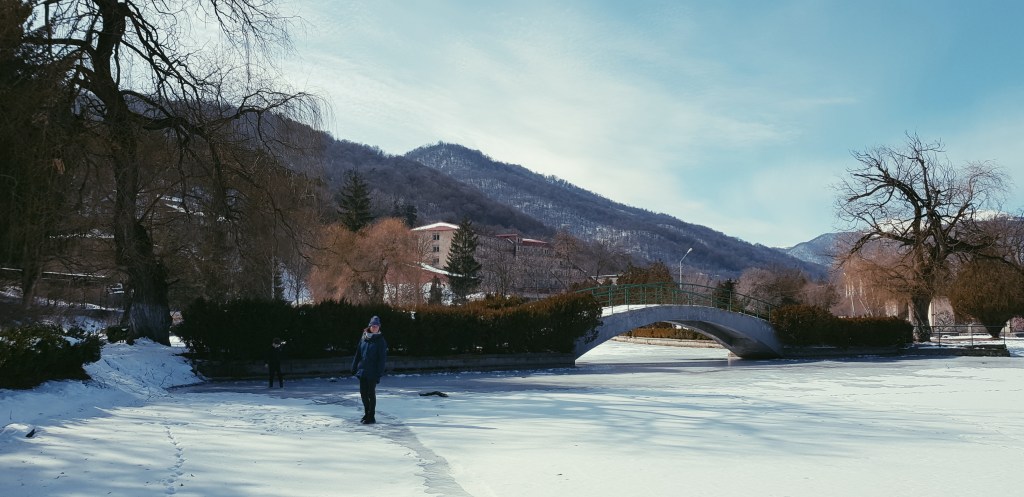
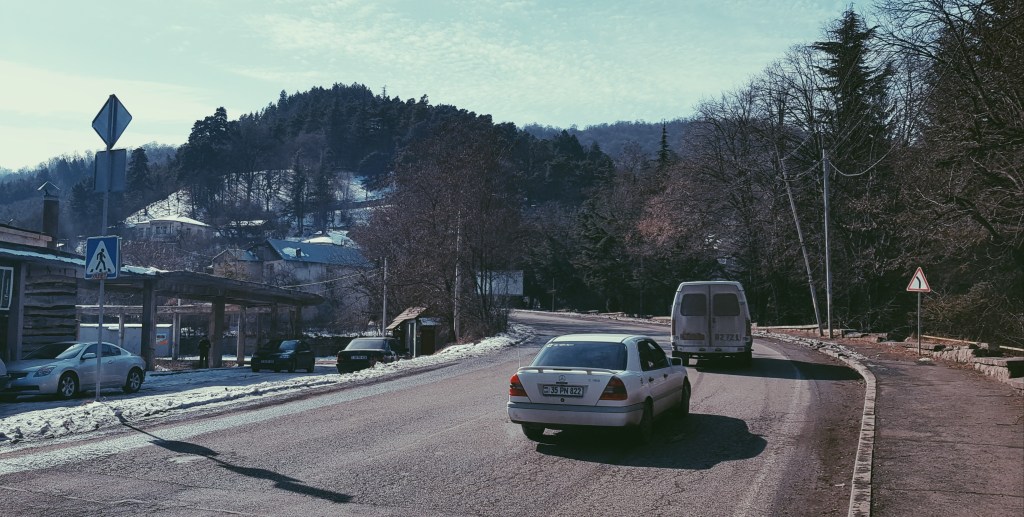
We found the villa quite easily, but unfortunately, access to it had been restricted by someone who privately owned the ground now. The guard didn’t even allow us to take pictures, so here’s a link to some pictures instead: https://www.atlasobscura.com/places/khanjian-villahttps://www.atlasobscura.com/places/khanjian-villa. The guard was extremely nice however, and he seemed genuinely sorry that he couldn’t let us pass.
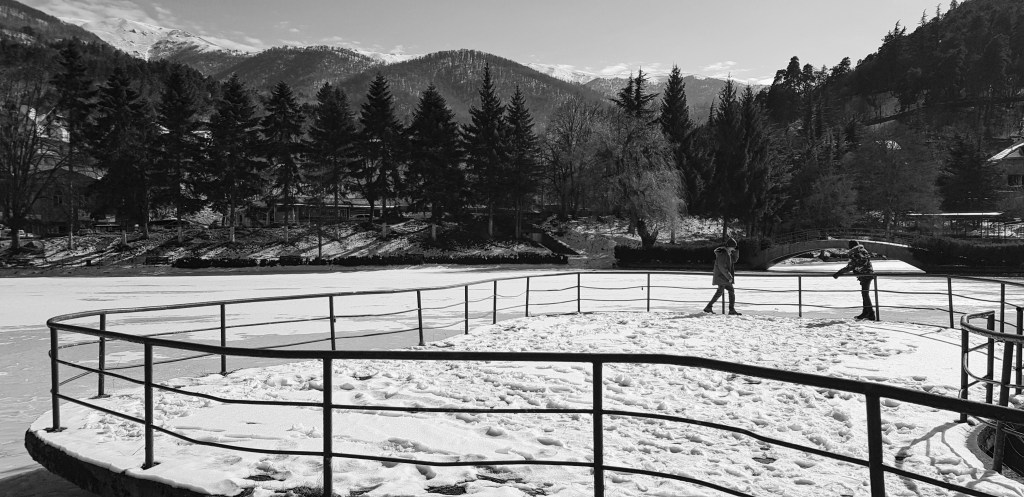
Our main goal of visiting Dilijan thus kind of failed, but that didn’t stop us from exploring the city further. And it’s a city worth exploring: Soviet architecture is everywhere.
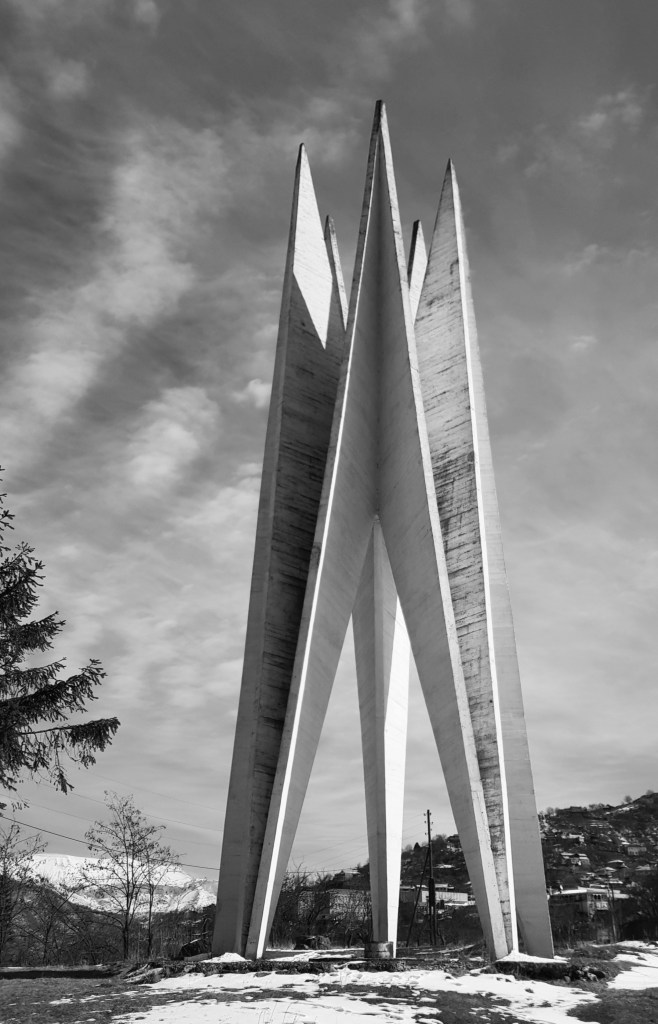
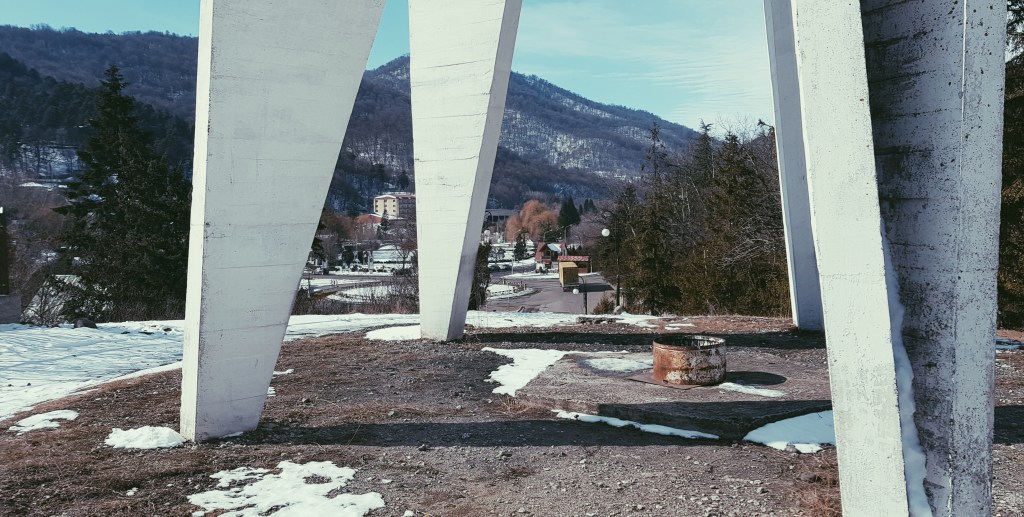
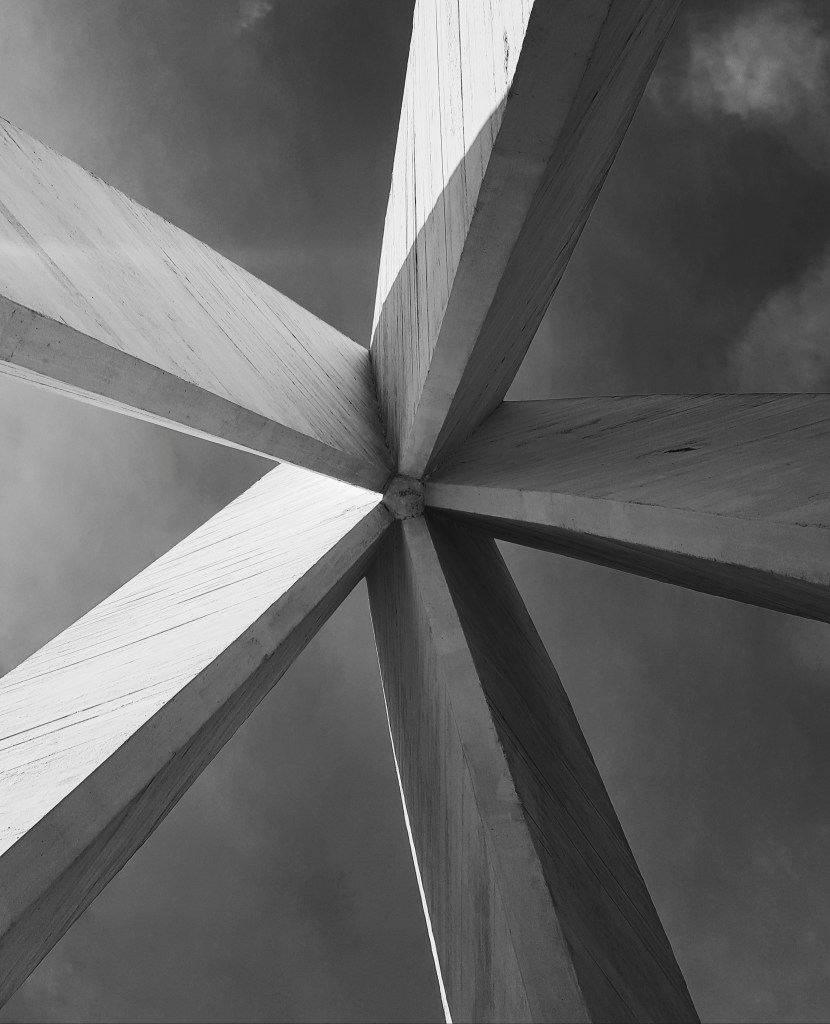
Human settlements in the region date as far back as 2000 BC. The city played a major role in medieval Armenia, when the area was a summer and forest resort for the ruling royal family. Russia acquired the territory from Persia in 1801, after which it has continually stayed under Russian / Soviet control until 1991 (except for during 1918-1920, when Armenia experienced a short-lived independence, after which the foundation of the Soviet Socialist Republic re-established Russian rule). Russian and Soviet influence are thus omnipresent in the city. An example is the beautifully preserved amphitheatre that has been built in 1900.
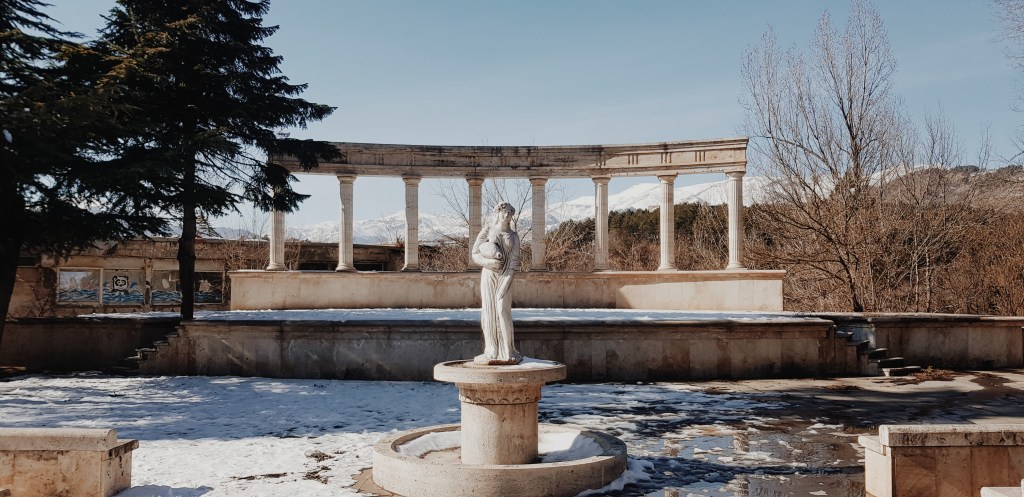
It was during this time that the village became a popular place to visit for Russian intellectuals. Because of its history, it might thus be better to compare Dilijan to Borjomi in Georgia: as a spa town where Russians and locals came to heal and relax.
Nowadays, the region tries to do the same, but even though the village is known for being a spa town with beautiful nature where people can hike to their heart’s content, it’s probably incomparable to the early 1900s, when rich locals came to Dilijan to built their villas here. Decaying Soviet buildings dominate the town, giving it an impoverished look, especially in winter.
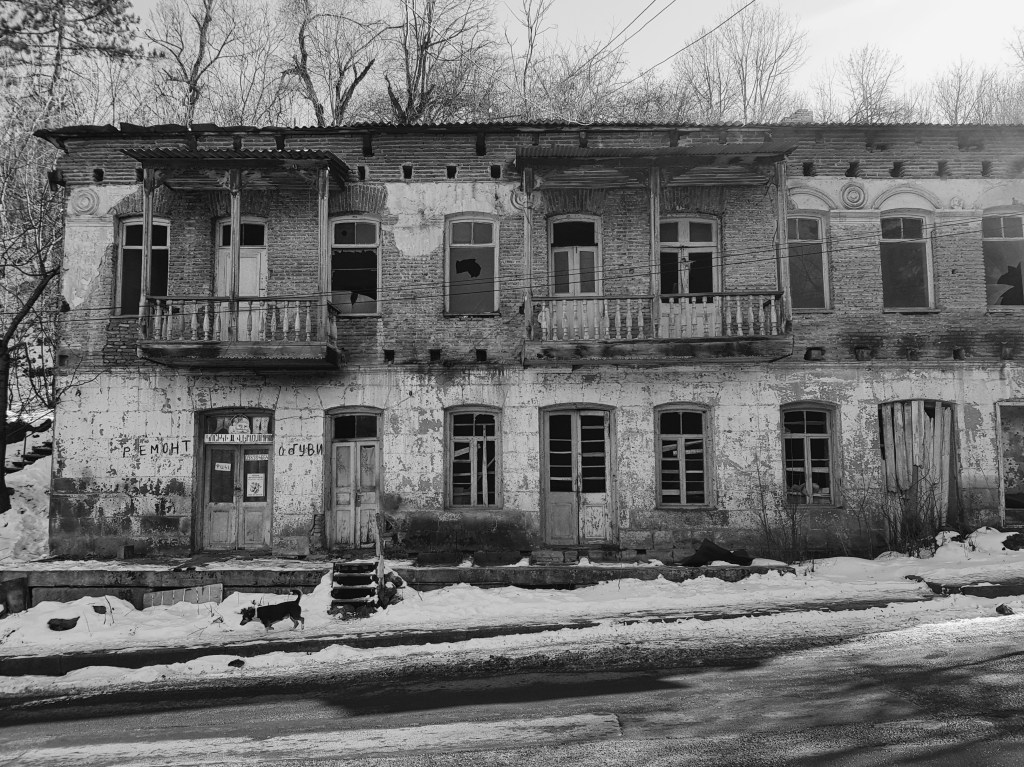
But while ruins of the villa built for Khanjian might symbolise the current state of the spa town, the new international private school provides a glimpse of hope for Dilijan.
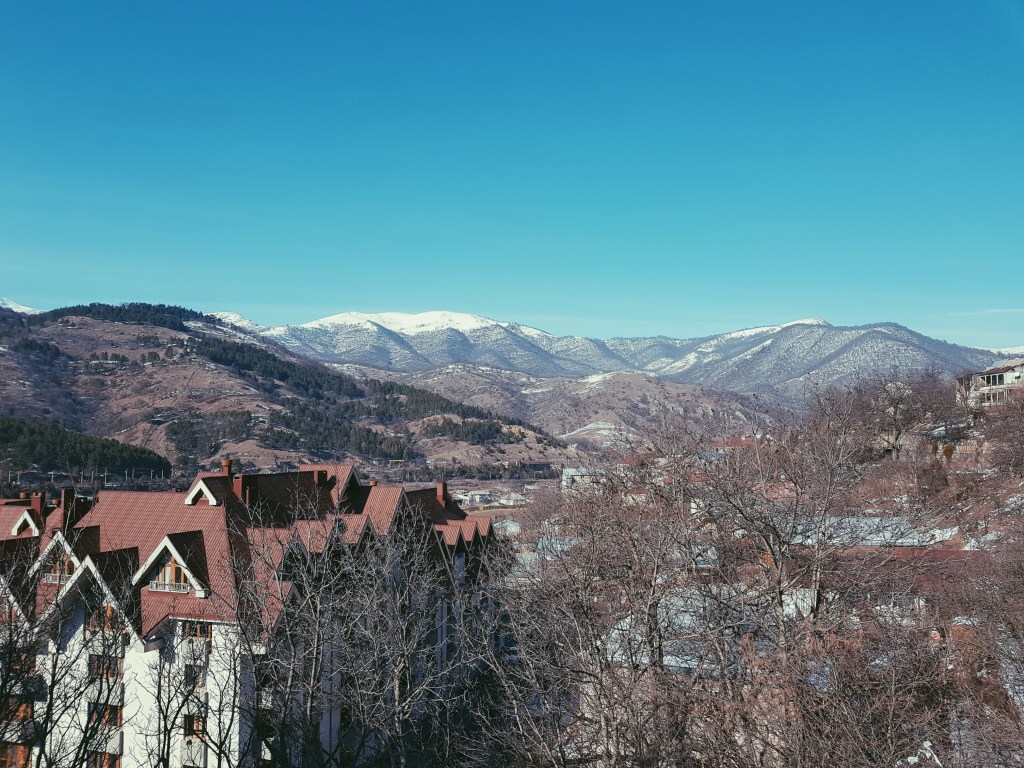
It might not be exactly a Switzerland, but ultimately, the town is worth a visit. If not for activities in nature, then surely for the Soviet architecture.
 Winter Winds